
CFRP · CARBON
CFRP and carbon fibre machining
Carbon-fibre composite combines high performance with specific requirements for tooling, fixturing and dust control. VDR Machining adapts the operation to laminate and application.
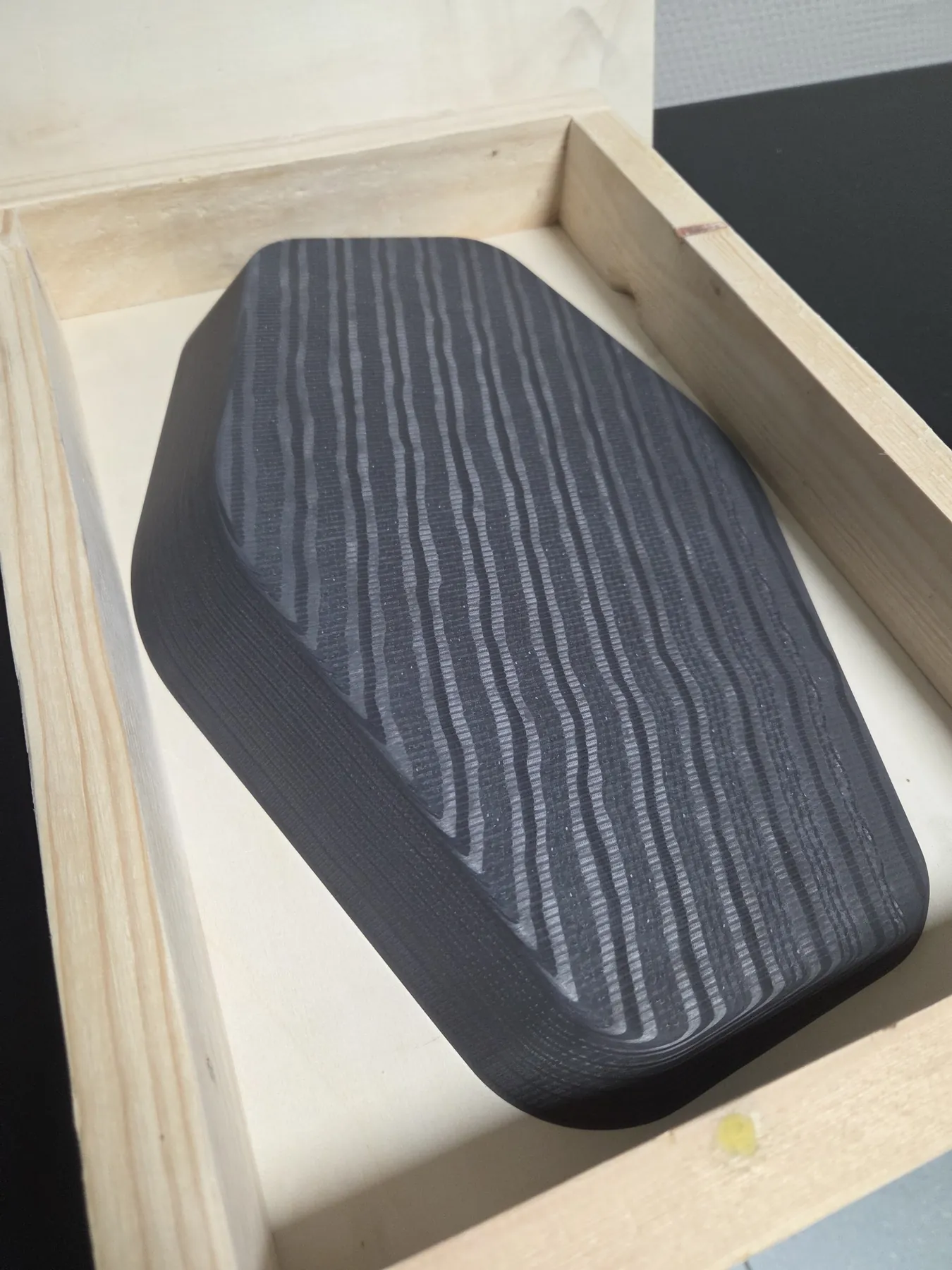
Edge quality and fibre-damage control
When milling or drilling CFRP, delamination, fibre pull-out and heat build-up can affect quality. Suitable support, cutting direction and tool strategy help form a controlled edge.
- Profiles and cut-outs
- Drilling and local pockets
- Complex transitions
- One-offs and production parts
Process choice for each laminate
Thickness, fibre orientation, resin matrix and end use influence how a carbon-fibre component is fixtured and machined. Critical dimensions and visible faces are therefore discussed in advance.
- Review of drawing and material lay-up
- Coordination of fixturing and machining sequence
- Attention to dust extraction and workplace control
Information to supply
Supply a STEP or DXF file with material type, laminate thickness, quantities, critical tolerances and required edge finish for a focused manufacturability review.
FREQUENTLY ASKED QUESTIONS
Questions about this process
What is CFRP?
CFRP means carbon fibre reinforced polymer: a polymer matrix reinforced with carbon fibres.
Can CFRP be drilled and milled?
Yes, when tooling, support, dust control and cutting strategy are matched to material and geometry.
How is delamination limited?
Delamination risk is reduced through a suitable combination of support, tooling, cutting direction and process parameters. The approach varies by laminate.
YOUR NEXT PROJECT
Can we machine it?
Send the drawing, material and quantities. VDR Machining will review manufacturability and discuss the most suitable CNC or robotic route.