
PHENOLIC LAMINATE · TUFNOL
Phenolic laminate and Tufnol machining
From flat engineering components to vacuum tables with fine channel patterns. VDR Machining machines phenolic and fabric laminates as functional production tooling or finished parts.
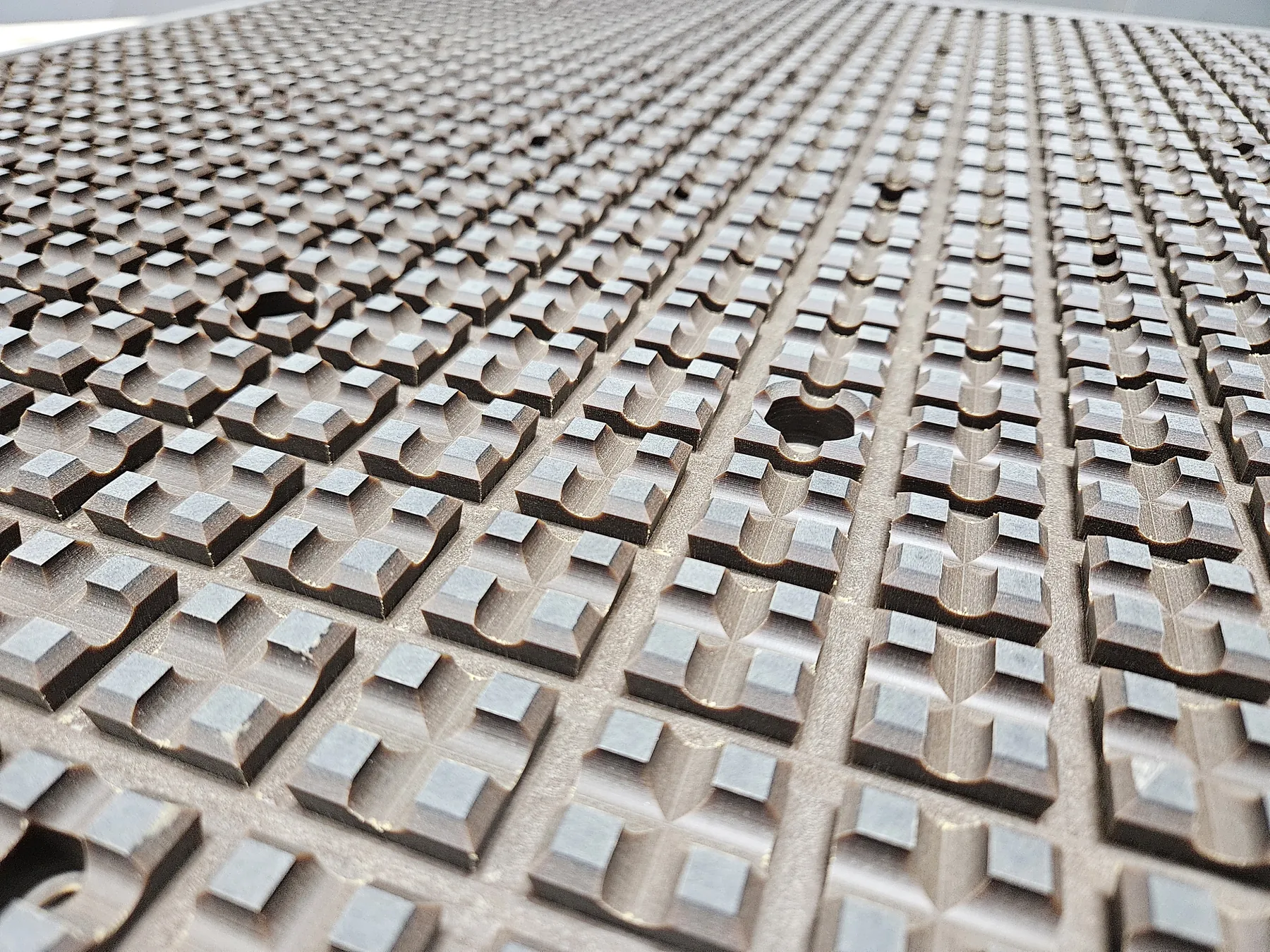
Controlled machining of engineering laminates
Phenolic laminate, fabric-reinforced phenolic laminate and Tufnol are used where properties such as stiffness, wear resistance or electrical insulation matter. Exact properties depend on reinforcement, resin and grade.
- Outer profiles and cut-outs
- Drilling and countersinking
- Pockets and mating faces
- Channel patterns and seal grooves
Vacuum tables and fixtures
A vacuum table requires coordination between flatness, channel pattern, sealing and connections. Geometry is matched to the product that will be held later.
- Fine vacuum channels
- Zones and seal grooves
- Product profiles and references
- Purpose-built production tooling
From design to manufacturable tooling
Send a STEP or DXF file with material grade, panel thickness, connections and critical faces so design and machining route can be reviewed.
FREQUENTLY ASKED QUESTIONS
Questions about this process
Are phenolic laminate, fabric laminate and Tufnol the same?
The names are sometimes used interchangeably, but may indicate different carriers, resins and grades. Always state the exact grade.
Can VDR Machining mill vacuum channels?
Yes. Fine channel patterns, zones and seal grooves can form part of a vacuum table or other production tooling.
What information is needed for a vacuum table?
At minimum: product geometry, panel size, material, channel and zone concept, connections, critical faces and required sealing.
YOUR NEXT PROJECT
Can we machine it?
Send the drawing, material and quantities. VDR Machining will review manufacturability and discuss the most suitable CNC or robotic route.