GFRP · GLASS FIBRE · G11
Glass Fibre Composite (GFRP) Machining
GFRP and G11 are abrasive fibre-reinforced materials. A suitable tooling and fixturing strategy is required for dimensions, edge quality and repeatability.
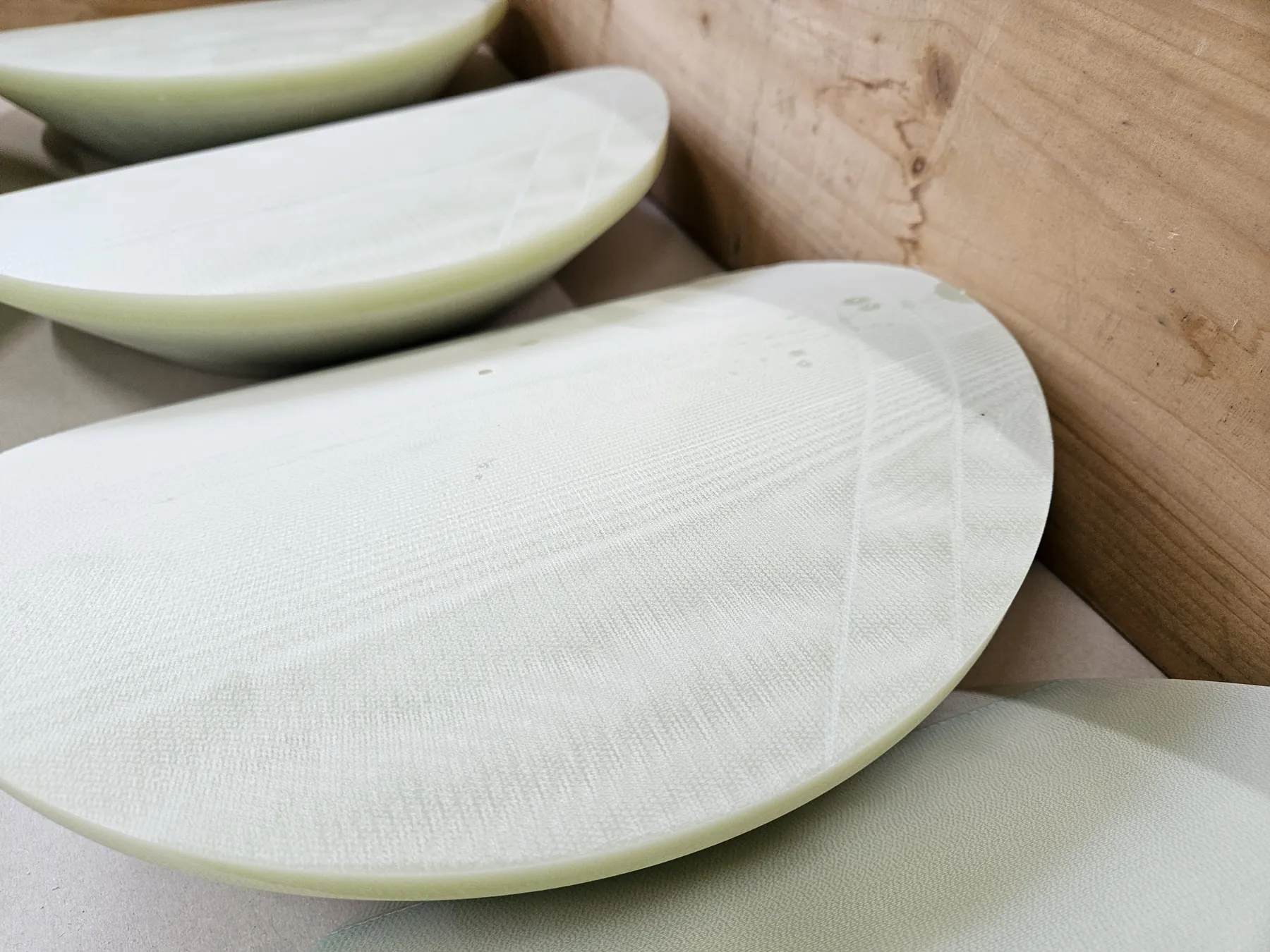
CNC machining of glass-fibre composite
Glass-fibre reinforced polymers are used for structural, electrical and industrial components. During machining, abrasive fibres require attention to tool wear and process stability.
- GFRP / glass-fibre composite
- G11 epoxy-glass laminate
- Epoxy and polyester composites
- Panels, test specimens and production components
Profiles, holes and functional geometry
CNC milling supports outer profiles, cut-outs, drilling, pockets and combinations of these operations. Fixturing is matched to panel thickness and critical dimensions.
- Dimensions and squareness
- Repeatable positioning
- Machining sequence matched to stability
A focused request
State the exact material, thickness, quantities and critical features. For test specimens, include the applicable standard or specification.
FREQUENTLY ASKED QUESTIONS
Questions about this process
What is the difference between GFRP and G11?
GFRP is the general material category for glass-fibre reinforced polymer. G11 is a specific epoxy-glass laminate grade with its own material properties.
Is GFRP abrasive to tools?
Yes. Glass fibres are abrasive and can accelerate tool wear, so tool choice and process monitoring matter.
Can VDR Machining process GFRP in series?
Yes. For repeat work, fixturing and process sequence are matched to consistent geometry and dimensions.
YOUR NEXT PROJECT
Can we machine it?
Send the drawing, material and quantities. VDR Machining will review manufacturability and discuss the most suitable CNC or robotic route.