CNC COMPOSITE MACHINING
CNC composite machining
CNC milling of fibre-reinforced composites and engineering laminates. VDR Machining translates drawing, material lay-up and tolerances into a controlled machining process.
Composite machining requires material knowledge
CFRP, GFRP and sandwich panels respond differently to cutting forces and heat than metals. Fibre direction, laminate build-up and support influence edge quality, dimensions and delamination risk.
VDR Machining therefore reviews not only geometry but also fixturing, tool choice, dust control and machining sequence.
- CFRP / carbon fibre
- GFRP / glass fibre, including G11
- Epoxy and polyester composites
- Sandwich panels and composite sheets
Operations and working range
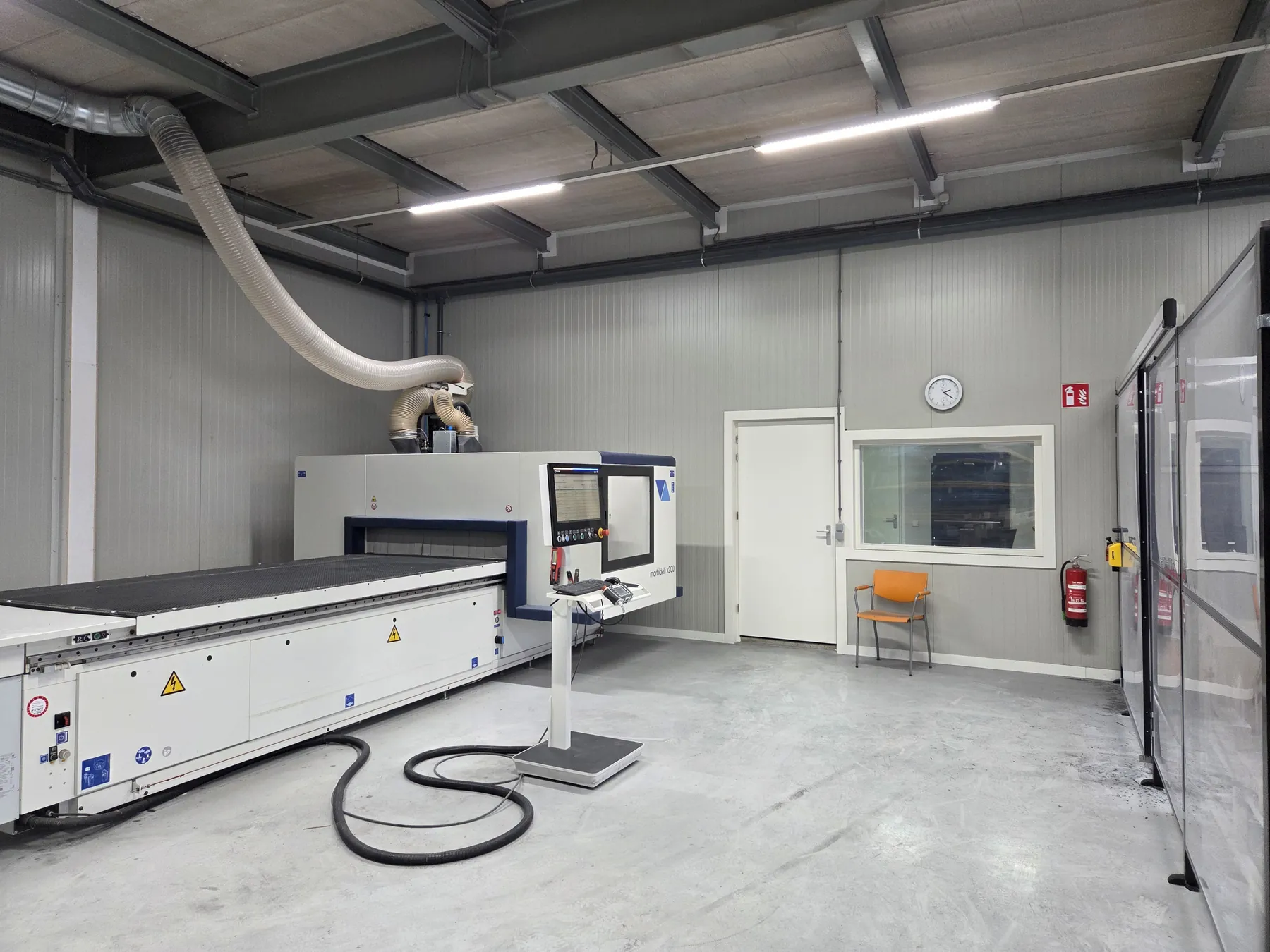
The 3-axis CNC machine supports panel and profile work across a 1500 × 3000 mm working range and a maximum working height of 120 mm.
- Profiling and contour milling
- Drilling, countersinking and pockets
- Channel patterns and vacuum grooves
- Prototypes, one-offs and production runs
From CAD file to component
A request is assessed fastest with a STEP or DXF file, material description, quantities and marked critical tolerances. The suitable production route is then discussed.
FREQUENTLY ASKED QUESTIONS
Questions about this process
What is the maximum CNC working range?
The stated working range is 1500 × 3000 mm with a maximum working height of 120 mm. Practical feasibility also depends on fixturing and machining direction.
Can VDR Machining produce prototypes and series?
Yes. The route can run from manufacturability review and trial part to one-offs and repeatable production runs.
Which CAD files can I supply?
Preferably STEP for 3D geometry or DXF for 2D profiles, together with material, quantities and critical tolerances.
YOUR NEXT PROJECT
Can we machine it?
Send the drawing, material and quantities. VDR Machining will review manufacturability and discuss the most suitable CNC or robotic route.